A mining robot does not need to replace a haul truck to prove its worth. A machine that checks a tunnel, samples air, or maps a damaged wall can keep people away from the worst conditions.
That makes inspection the clearest starting point for mining robots. The harder work is proving that these systems can sense danger, keep a link to the control room, and stop safely when the mine changes around them.
Quick read
- Remote inspection puts distance between workers and unstable ground.
- Sensors must keep working through dust, poor light, water, and metal structures.
- A robot needs a safe failure mode before it needs a long list of tasks.
Where mining robots can help first
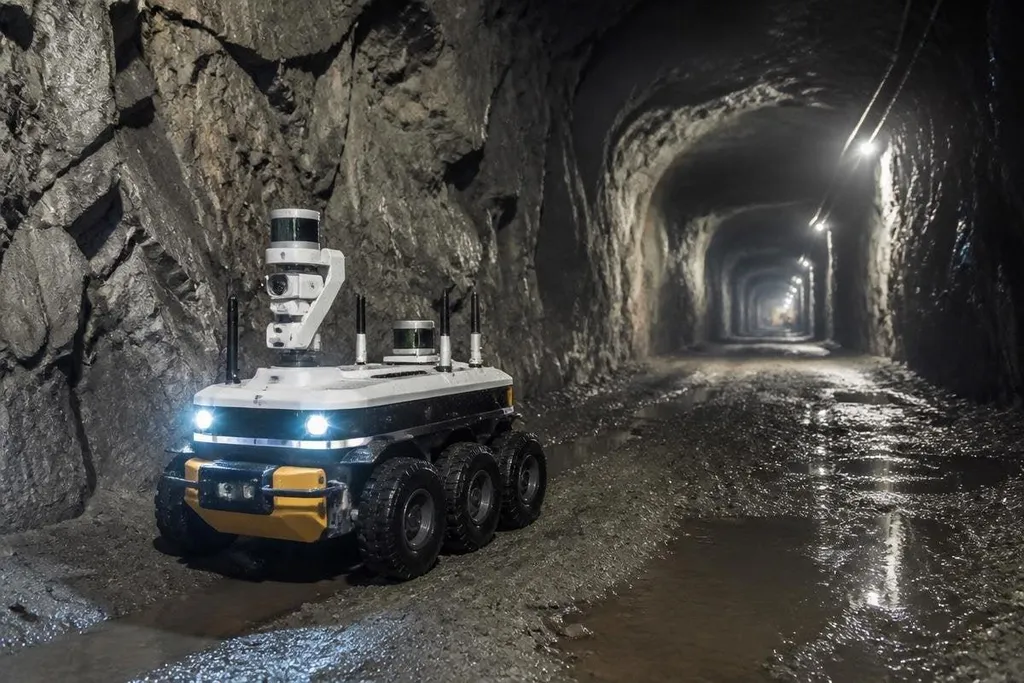
Underground mines contain spaces that are hard to reach and costly to close. A tracked robot, wheeled vehicle, or flying system can enter after a rock fall, inspect a roof, or check a route before a worker goes in.
The machine may carry cameras, LiDAR, gas sensors, or a thermal camera. LiDAR measures distance with light pulses, so it can build a map even when the scene has poor lighting. A gas sensor can warn the control room about a change in air before a person enters the area.
The useful result is not a robot moving by itself. It is a better decision about who enters, which route stays open, and what equipment needs repair. That is why inspection may reach working mines before fully autonomous digging does.
Dust can blind a camera, and a weak radio link can cut an operator off underground. A report from Robot 24 can place a mining claim beside the machine, site, date, and control method, so you can judge whether it came from a working mine or a staged test.
The hard part is the mine, not the demo
A mine changes from one shift to the next. Dust can cover a camera. Water can block a sensor. A rock fall can close a route that the robot mapped earlier.
Radio signals can weaken around rock, metal, and bends in a tunnel. Those conditions affect every part of the system. The robot needs a map, but the map can become old.
It needs remote control, but the link can drop. It needs enough battery to return, not only enough power to reach the work area.
A machine that loses its signal must stop in a known place or return along a safe route. If it cannot do that, the mine still needs a recovery plan that does not send a person into the same hazard.
This is where many claims need more proof. A short run on a clean test site says little about weeks of dust, repeated impacts, changing ground, and maintenance by a mine crew.
What mine operators should ask for
The purchase decision should start with the task and the failure case. A robot built for roof inspection may have the wrong wheels, battery, camera, or radio for a deep tunnel.
Use this checklist before a pilot:
- Name the task: inspect a roof, map a route, measure air, or check equipment.
- Set the work area: record tunnel width, slope, water, dust, lighting, and signal limits.
- Test the return plan: confirm what the robot does after a lost link or low battery.
- Check the data: make sure maps, images, and sensor readings reach the control room.
- Count the staff time: include setup, charging, cleaning, repairs, and recovery.
- Set a pass mark: agree on the result that earns a wider trial before the test starts.
This process keeps a pilot tied to mine work. It also gives the operator a fair way to compare a robot with a person, a fixed sensor, or a vehicle already in use.
What comes after inspection
Once a robot can work safely in a limited area, the same platform may support stockpile checks, equipment inspection, or repeated mapping. Each added task still needs its own test because a robot that can map a tunnel may not handle loose material or a moving vehicle.
I’d judge mining robots by their recovery plan before their autonomy claims. The machines worth buying will be the ones that show where they work, where they stop, and how a crew gets them back.